

How To Register For A Site With No Form
Fifty-fifty though user registration is quite a common thing, it's as well one of the trickiest parts of spider web blueprint. You need to make sure that your sign-up page isn't an obstacle for your users by post-obit these tips for designing a improve registration process.
Exercise non Use 'Sign In' & 'Sign Up' Together
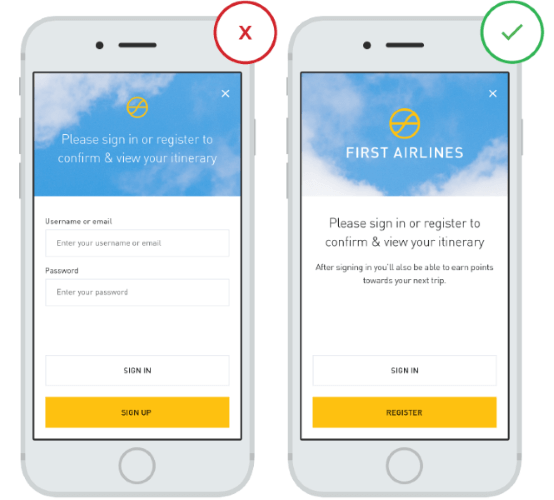
How fast tin can you lot spot the divergence between 'sign upwardly' and 'sign in' on the image below?

The problem is that 'Sign In' and 'Sign Up' are quite close. When buttons look besides similar and both use the same verb in their labels it'southward pretty piece of cake for users to become confused.
Users might click one instead of the other. Usually, this trouble frustrates the users who effort to log in considering they brand the mistake the most. This happens considering users scan the screen quickly and presume that the first call to action that catches their attention is the correct one. Even if users didn't brand the error, they'll spend extra time to distinguish the 2 buttons.
Users shouldn't take to pause and retrieve what push should they click.
If you want to provide a skilful user experience, avoid using 'sign up' and 'sign in' together. Instead, make the button distinct from each other past using different verbs in labels:

…and different visual advent for buttons (colors and styles) to make the deviation more evident:
Eliminate as Many Fields as Possible
When registering a new user, ask the minimum you need to get y'all started.
The fewer class fields yous can go away with in your registration process, the less likely users will abandon information technology. Consider what information you absolutely must gather:
- One of the things any registration form can do better is to remove the double entry password and electronic mail field. There are other solutions for capturing typos.
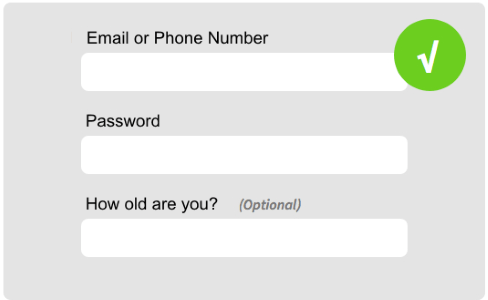
- From a UX perspective, it's better to accept no optional fields. Assuming that if a piece of information is not required there's no point in wasting a user'south time. Y'all can always ask further data downwardly the line. But if in that location are yet optional fields in your registration class, make sure to clearly highlight them with label Optional:
Login forms vs registration forms
Many sites and apps employ almost the same number of input fields (email, username, and countersign) for login and registration forms and showing the two side by side:
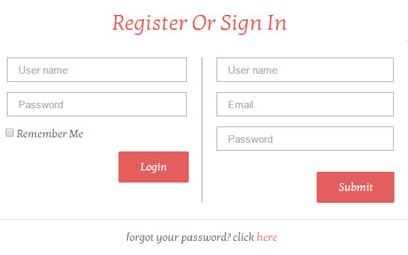
However, it's very important to conspicuously differentiate the registration from the login class and to minimize the chance of users accidentally attempting to log in via the registration class.
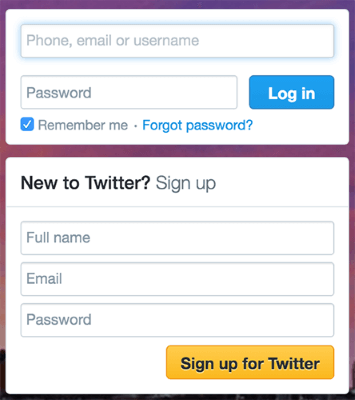
For example, Twitter's login and registration forms practice not just look different, only they also accept different colors for CTA buttons and proper aid text.
Let Users Meet Their Password
A common problem during login and registration is mistyping a password. And this is fairly easy to do it because the countersign field is usually masked (because of security reasons). People might mistype their password, specially on mobile devices.
Many sign-upwardly forms endeavour to forestall mistyping errors by using the "confirm countersign" field when creating a countersign:
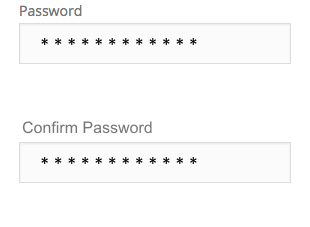
While the confirm password field seems sensible, using it doesn't completely solve the problem.
Users make more than errors when they can't see what they're typing while filling in a class.
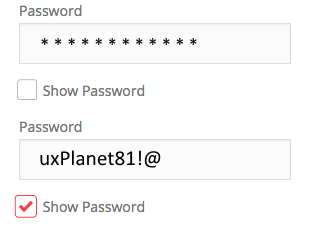
Don't make the user make full in the same field twice! Implementing a 'testify password' selection is a proper way to prevent mistyping errors. You lot tin can place a checkbox near the password field. When users click it, information technology'll display their input unmasked.
Provide Assistance
You should clearly identify and explain form field errors. If a field isn't completed correctly, don't just tell users they fabricated a mistake. Show them in which field the error occurred, and explicate the correct style to fill out the field.
User-friendly Mistake Messages
"For security reasons, your password must be longer than 6 and shorter than ten characters, contain at to the lowest degree one capital letter letter, a number and a symbol."
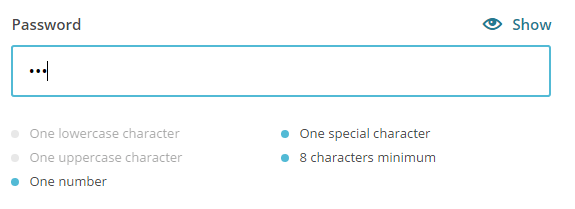
This is a typical countersign requirement, just demanding users to consider all of the field requirements isn't a proper way of explaining the trouble. Have a cue from Mailchimp and bespeak user progress with a "password force" visual.
Real-time Data Validation
Existent-time validation immediately informs users about the correctness of the provided information.
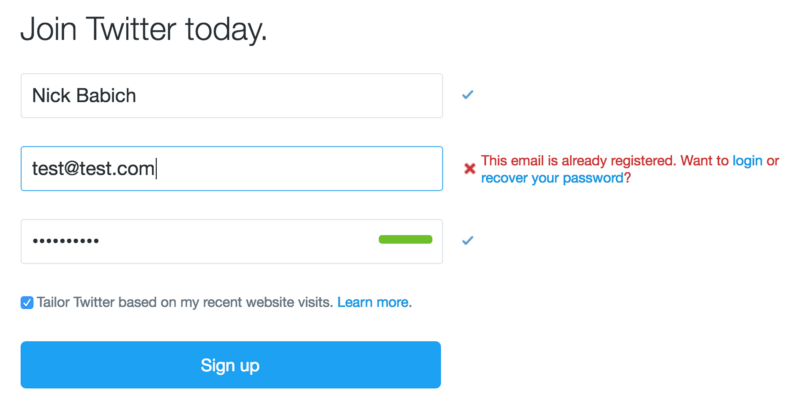
This approach allows users to correct the errors they make faster without having to expect until they press the submit push button to see the errors. However, form validation shouldn't only tell users what they did wrong, it should also tell them what they're doing correct. This gives users more than conviction to move through the registration form.

Real-time validation works especially good for less obvious answers, such equally picking a unique username or a stiff countersign. Twitter is an obvious example here. On the screen below y'all tin can see that the form informs me that this email is already in use and offering me some options (either to login or recover my password).
The challenge of Usernames
If you ask users to create a username during registration, near probably you're dealing with following difficulties:
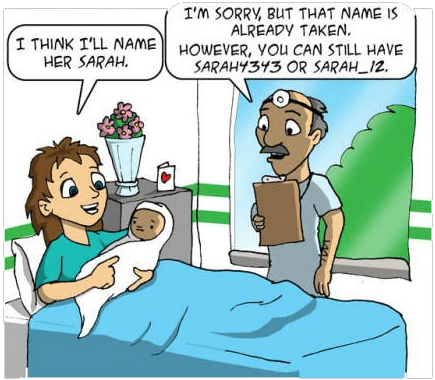
- Since usernames have to exist unique, users might need to spend a few minute before they end up with a proper noun, considering preferred usernames have already been taken past other users.
- Users end up registering with a make new username that they inappreciably call up after a while.
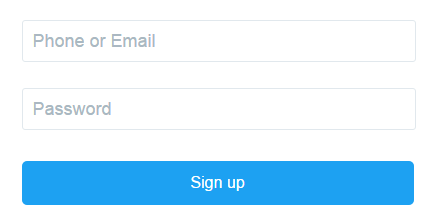
Your site or app should allow users to log in with their email address or phone number:
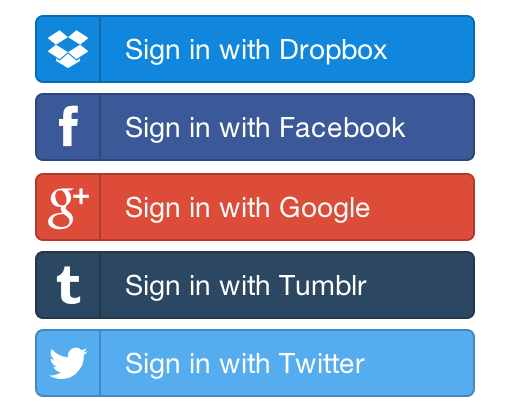
Let User to Log in Via Facebook, Twitter or Google
Why forcefulness users to create some other gear up of login details when you can let them sign in via an external account, such as Facebook, Google or Twitter? This feature can convalesce registration headaches.
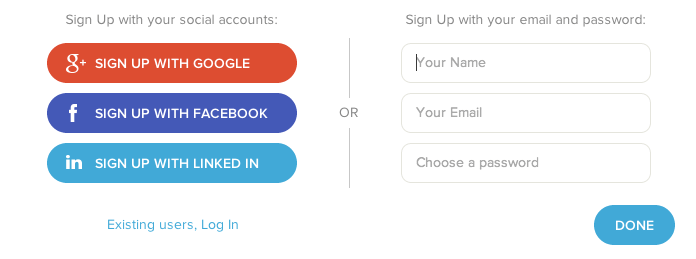
Comparing to the standard registration with e-mail, it has both pros and cons:
- Pros: Users don't accept to make full out the registration form, to create another pair of username/countersign and to verify emails, hence can sign up in like 10 seconds instead of 10 minutes. And most important, users don't have to recollect a new usernames/passwords.
- Cons: Since the information almost the user is loaded automatically it raises a huge privacy business and not anybody is likely to exist happy to share their profile data. For such cases, you should have traditional login system running in parallel.
Keep Users Signed In When They Register
Mutual issues with registration are requiring users to log in immediately subsequently registration. This extra step usually frustrates the user.
You lot should pattern the app and then that new users stay signed in immediately subsequently registration (unless security is a real issue).
Make Password Recovery Painless
It's very important that if users practise forget their password (and they will) that this is well handled past the login procedure.
Make information technology easy for users to reset their password then they don't abandon your service. Every bit a starter ever have a clear 'Forgotten your countersign?' link for your login form and this link should be visible all the time (not just subsequently the incorrectly entered countersign)

Bonus. Follow a 'Try Earlier You Buy' Strategy
Users will abandon an app/online service that asks them to provide personal information upfront unless there'due south some grade of firsthand payoff (e.g. ordering a taxi). In item, services with low brand recognition must clear a higher hurdle when they ask users to register at the beginning of the experience because forcing registration likewise early on can cause more than 85% of users to abandon the production.

Information technology is better to evangelize a limited set of features immediately than nothing at all. Thus, follow a 'try before you buy' strategy. Try earlier you buy strategy is virtually giving new users the power to feel your production so that they'll personally interested in signup. People are more than likely to sign upward and provide real personal information if they just knew what sort of product and feel they receive.
A try before you buy pattern doesn't mean you can't inquire a user to create an account. It but means you enquire for that after delivering value for the user.
Conclusion
When yous strip every barrier away from signing up, what you get is lots of sign-ups. And lots of sign-ups doesn't translate automatically to the lots of customers. Customers are the issue of a series of events. And creating an efficient registration process is just a first step in this direction.
Near the author:
This post originally appeared on babich.biz, written by Nick Babich. Nick is a software developer who'southward passionate about user experience.

How To Register For A Site With No Form,
Source: https://usersnap.com/blog/registration-forms/
Posted by: mchughtheirat97.blogspot.com
0 Response to "How To Register For A Site With No Form"
Post a Comment